
Supplier investigation task management
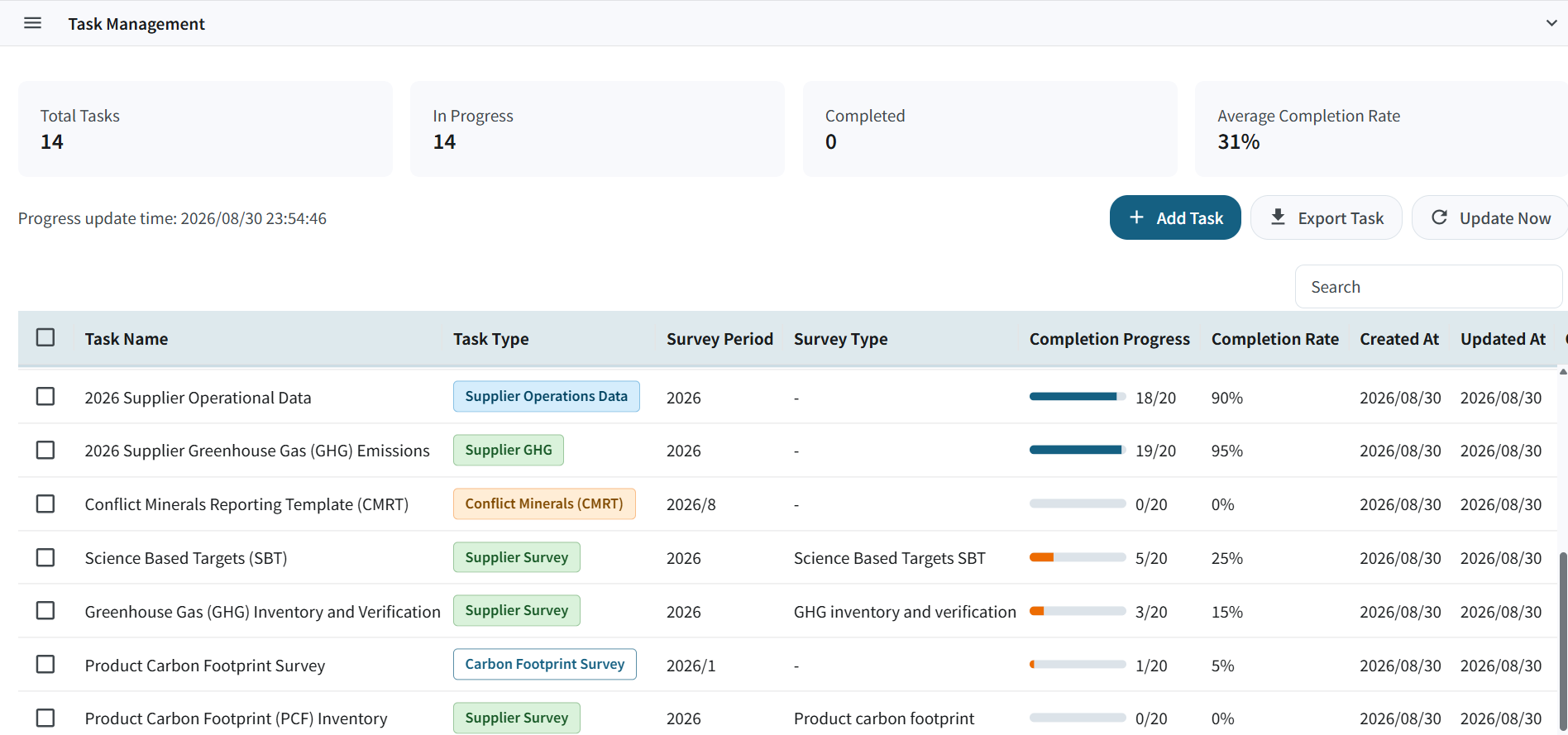
Centrally dispatch supplier investigation tasks such as carbon footprints, greenhouse gases, and responsible minerals to instantly understand the completion progress and recovery rate of each task.
From supplier list management to supply chain risk and performance decision-making
Supplier management no longer only focuses on price, delivery and quality. Carbon emissions, responsible minerals, material compliance and violation records have gradually become important basis for companies to evaluate the resilience of supply chains.
The supplier management module integrates various sustainability investigations, reporting progress, carbon emissions and emission intensity, raw material compliance and violation risks on the same platform to help companies identify suppliers that need priority tracking or coaching, and incorporate sustainability performance into supplier classification and procurement decisions.
Carbon footprint, greenhouse gas, responsible minerals and material compliance surveys may be conducted simultaneously in different years; if you rely on email and Excel operations, it is difficult to know what tasks each supplier should complete.
The energy, carbon emissions, transactions, material composition and supporting information provided by suppliers are in different formats. The organizer needs to repeatedly confirm the unit, period and completeness. The compilation process is time-consuming and error-prone.
Looking at the total carbon emissions alone is easily affected by the scale of supply; without a comparison basis such as transaction amount, purchase weight or quantity, it is difficult to objectively judge the supplier's emission intensity and improvement extent.
The full substance information of raw materials involves a variety of chemical substances and regulatory thresholds. Manually checking RoHS, REACH, IEC 62474 and other requirements one by one is not only time-consuming, but also may miss substances that exceed standards or need to be declared.
Violations may come from different authorities and investigation sources; without unified aggregation, it is difficult for managers to understand violation trends, affected suppliers, and cases that have yet to be manually confirmed.
From supplier filing, investigation and dispatch to risk analysis and improvement tracking, the system centrally connects the data collection and management processes of different sustainability issues, so that every task has progress, every data has its source, and every risk has follow-up processing.
Supplier profile → Survey task setting → Task distribution and reporting → Reply and attachment collection → Data verification → Performance and intensity analysis → Risk identification → Tracking and improvement
Centrally establish basic supplier information, transaction relationships and related classifications to form a consistent supply chain management list.
Establish investigation tasks such as carbon footprint, greenhouse gases, responsible minerals, SBT or material compliance according to annual and management needs.
Assign the task to the corresponding supplier, and clearly set the investigation period, reporting content and attachment requirements.
Centrally receive data and supporting documents submitted by suppliers, and present completion progress and recovery rates in real time.
Confirm the completeness and rationality of the data, and check the raw material composition and compliance with material specifications in accordance with applicable requirements.
Compile suppliers’ annual carbon emissions, main emission sources, and increase and decrease trends, and calculate emission intensity based on transaction amount, weight, or quantity.
Integrate regulatory violations, substance exceedances and other investigation results to identify affected suppliers and high-risk projects.
Arrange supplements, reviews, coaching or improvement tracking according to risk levels, and continuously update suppliers' sustainable performance.
Centrally dispatch supplier investigation tasks such as carbon footprints, greenhouse gases, and responsible minerals to instantly understand the completion progress and recovery rate of each task.
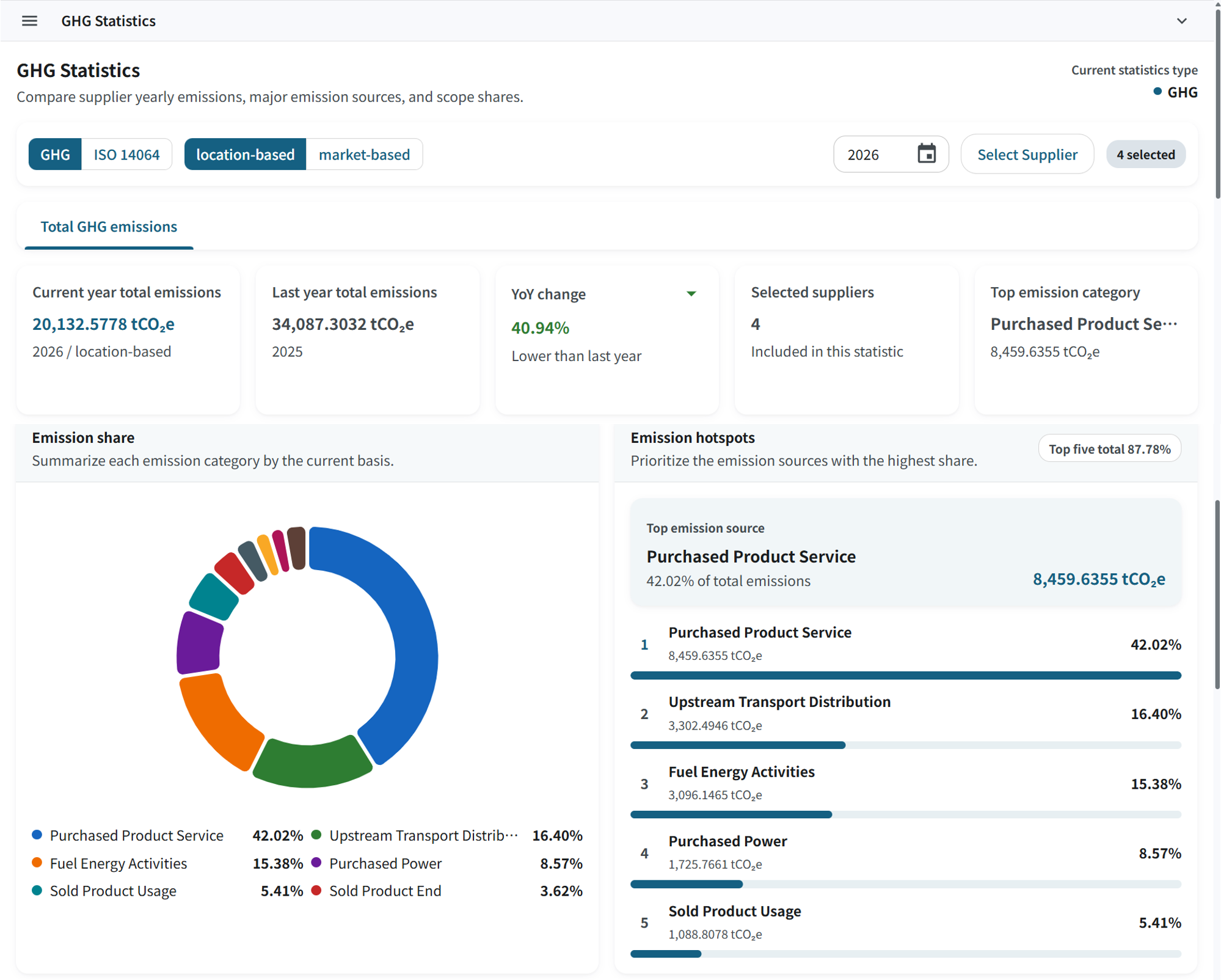
Compile suppliers' annual greenhouse gas emissions, increase and decrease trends, and main emission sources to quickly identify supply chain carbon emission hot spots and priority improvement targets.
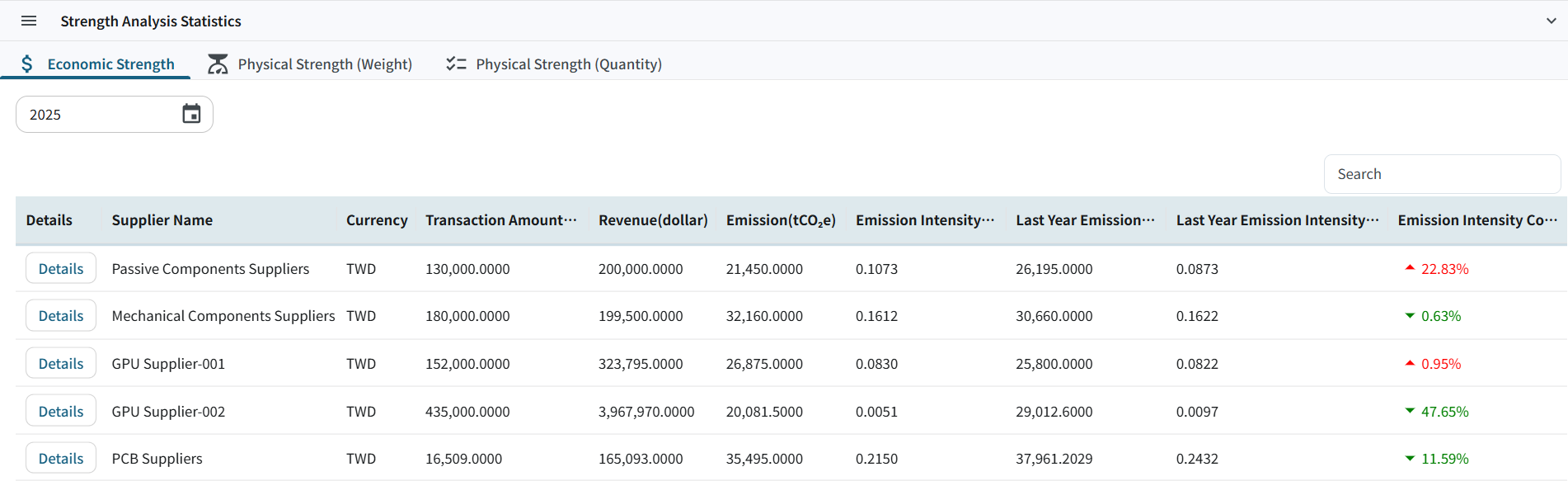
Combining supplier transaction amount and carbon emission data, calculate and compare annual economic emission intensity, and quickly identify changes in carbon efficiency and prioritize coaching targets.
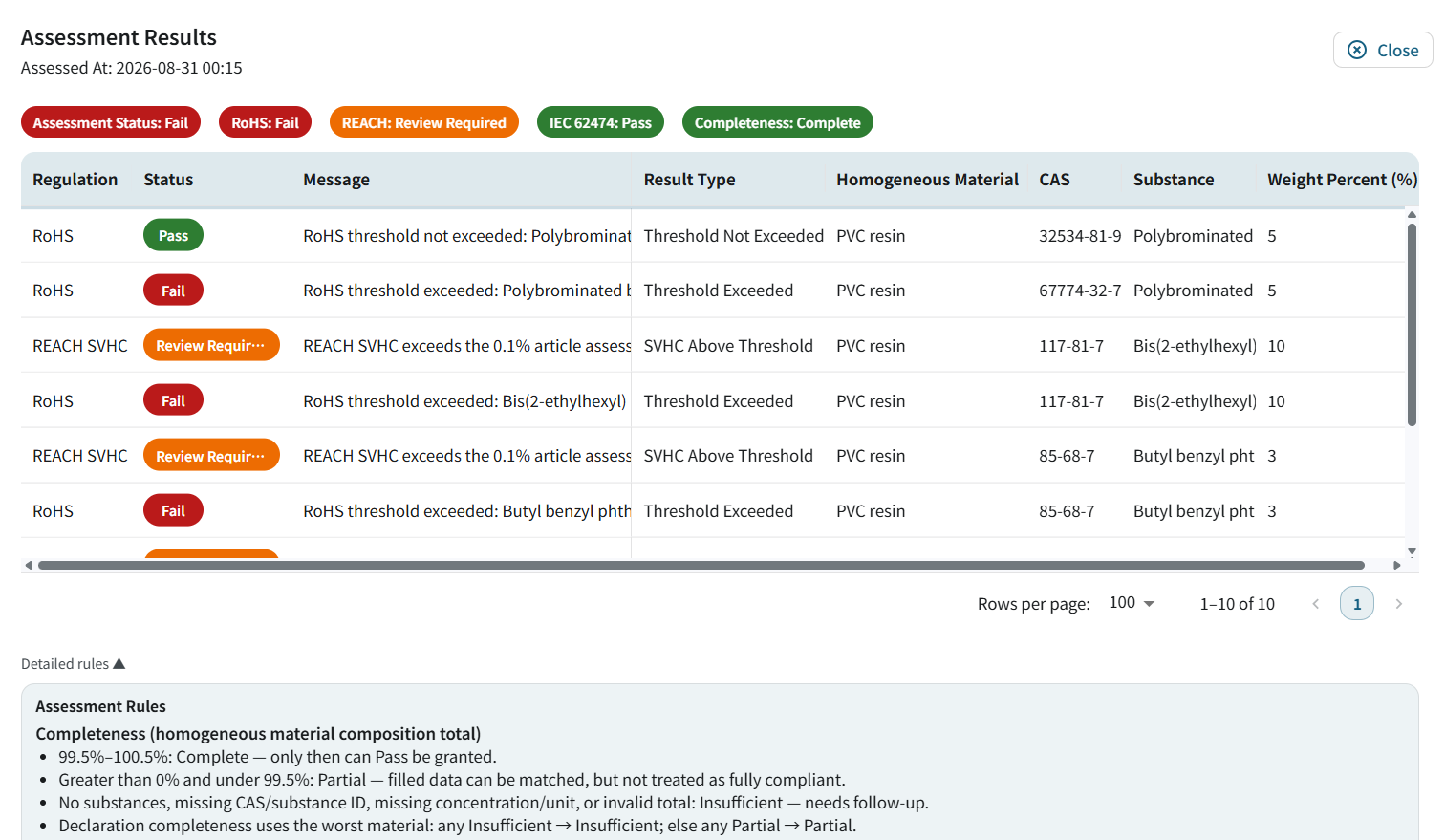
Automatically check the composition integrity of all material data of raw materials and compliance with RoHS, REACH, IEC 62474 and other standards, and quickly identify excessive substances and items to be reviewed.
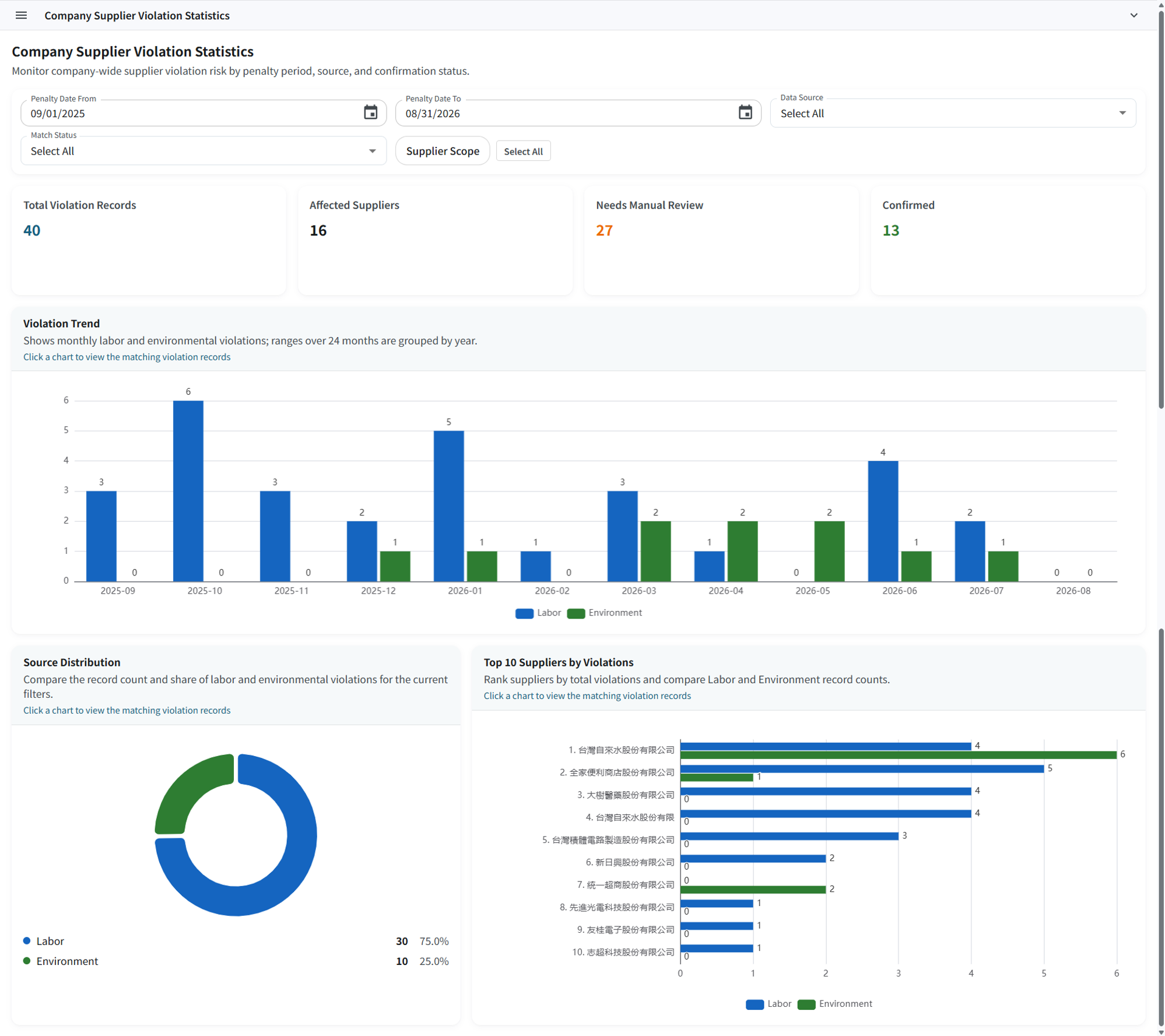
Compile the number of supplier violations, scope of impact, data sources and confirmation status, quickly identify high-risk suppliers through trend and ranking charts and arrange follow-up processing.
The organizer can dispatch different continuous surveys and tasks according to suppliers on the same platform, centrally manage the recipient list, and instantly check the number of ongoing, completed and pending responses.
The system automatically compiles the number of completions and recovery rates of each task. The organizer does not need to manually update the form and can quickly find suppliers who have not yet filled in the form.
Annual carbon emissions, main emission sources, and economic or physical emission intensity can be analyzed simultaneously to help companies eliminate differences in supply scale and compare suppliers' carbon management performance more objectively.
The module checks the name, CAS number and concentration of chemical substances in accordance with applicable specifications, clearly identifies qualified, unqualified and items to be reviewed, reducing the risk of missed judgments caused by manual verification one by one.
Violation information can be centralized and compiled according to period, data source and confirmation status, and affected suppliers that need priority processing can be quickly identified through trends and rankings.
Carbon emissions, material compliance, responsible minerals and violation records can be integrated into a consistent sustainability assessment basis to support supplier grading, improvement coaching and purchasing decisions.