
Energy Trend and Anomaly Identification
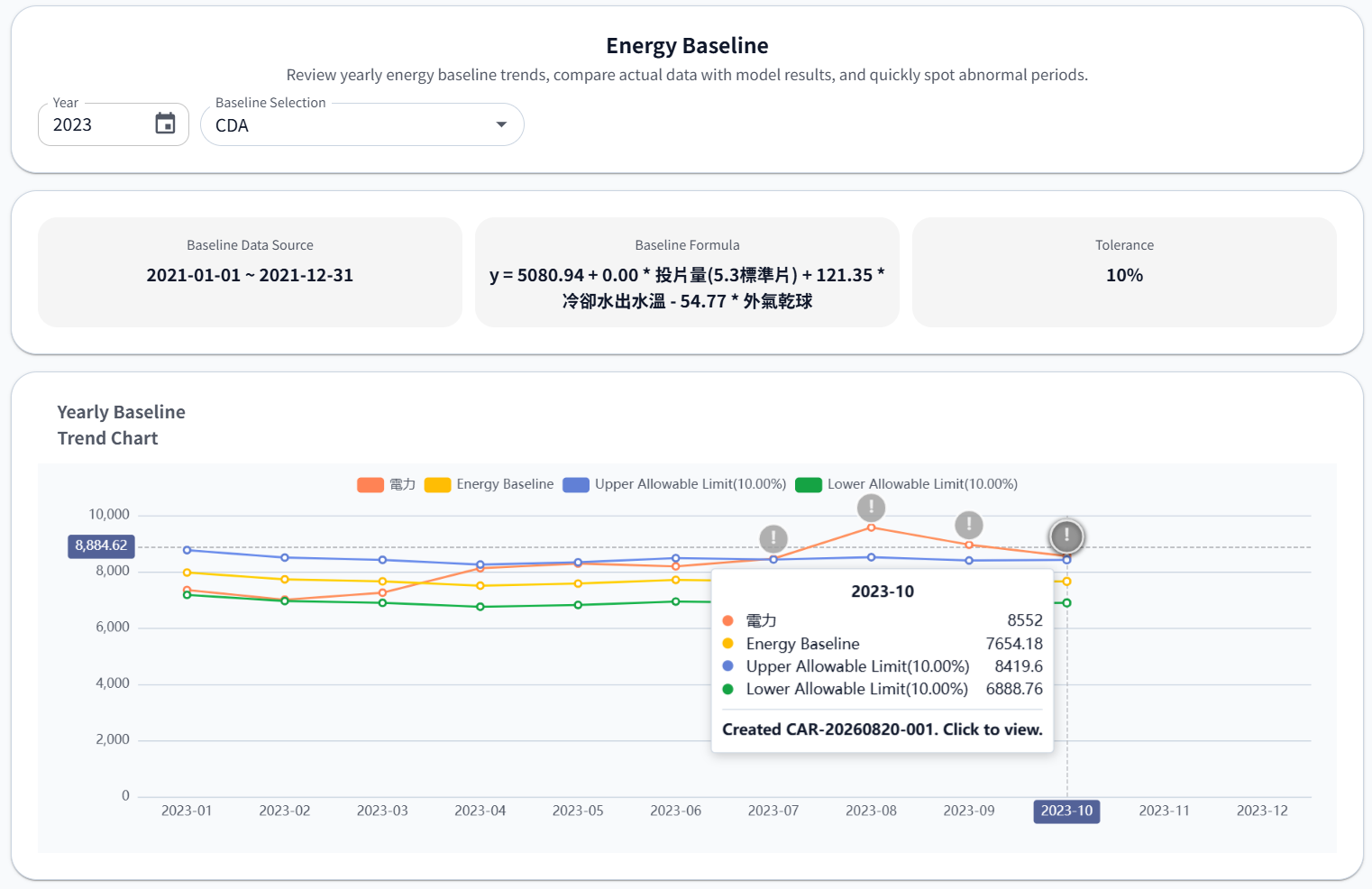
Compare actual energy consumption with reasonable ranges through the energy baseline model, visually grasp annual trends and automatically mark abnormal periods to help track improvements early.
Turn energy usage that occurs every day into a management basis for continuous improvement
Energy management can't just look at bills at the end of the month or refresh the data before an audit. The ISO 50001 management module centrally manages equipment inventory, energy usage, major energy usage, energy baselines, performance indicators and improvement plans, assisting the team in identifying anomalies, tracking energy-saving measures, and using actual data to confirm whether energy performance has improved, allowing energy management to be truly implemented in daily operations.
The usage of electricity, fuel and equipment is scattered in bills, meter reading records and Excel files of different departments. Managers need to spend a lot of time sorting it out, and it is still difficult to confirm whether the data is complete.
Air conditioning, lighting, heating and water treatment equipment are distributed in different areas, and equipment specifications, management personnel and energy consumption data are stored separately. It is difficult to quickly find the corresponding information during inspection or analysis.
Output, climate and operating conditions may all affect energy usage; if you only compare the usage before and after, it is easy to ignore the differences in variables, and it is difficult to objectively judge whether energy performance has truly improved.
Abnormal events, improvement measures and division of responsibilities are scattered in emails or meeting minutes, making it difficult for managers to know whether the problems have been solved and whether the results have been confirmed.
Policies, procedures, energy reviews, and performance records are maintained by different personnel, and it is easy for versions to be mixed, approval status to be unclear, or documents to be temporarily found during audits.
From the establishment of equipment and energy data, analysis of major energy usage to performance tracking and correction and improvement, the system connects the planning, execution, inspection and improvement processes of ISO 50001, transforming energy usage data into sustainable tracking of energy management basis.
Organization and site setting → Equipment inventory establishment → Energy data collection → Energy review and identification of major energy usage → Establishment of baselines and performance indicators → Energy usage monitoring and abnormal identification → Improvement plan execution → Effectiveness confirmation and document retention
Establish organizations, floors, sub-areas, managers and authorities, and clearly define the scope of energy management and division of labor.
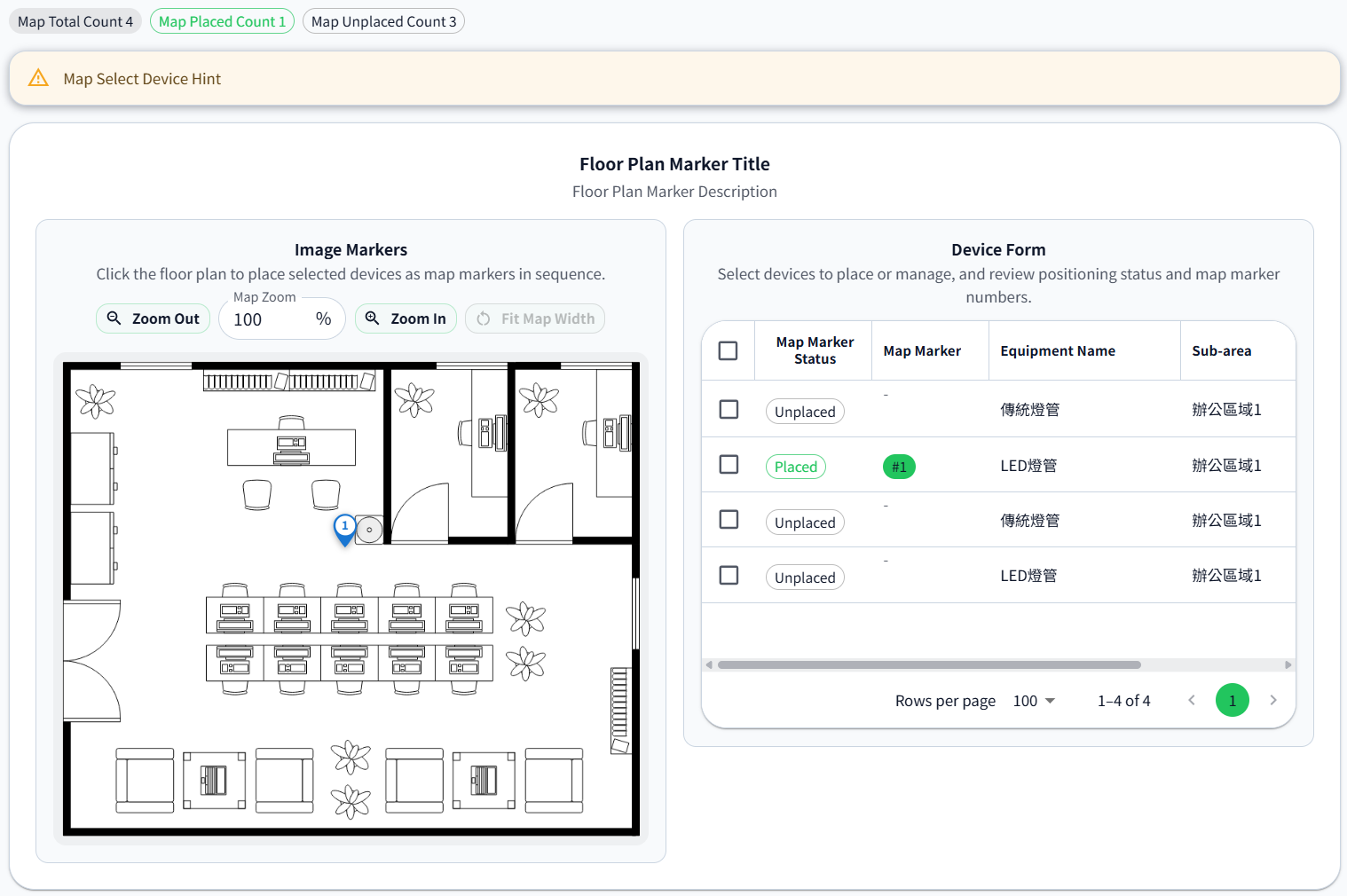
Centrally register equipment names, specifications, quantities, energy types and usage sources, and mark equipment on the site plan.
Compile electricity, gasoline, diesel, natural gas and other energy consumption to establish a sustainable and updated energy data foundation.
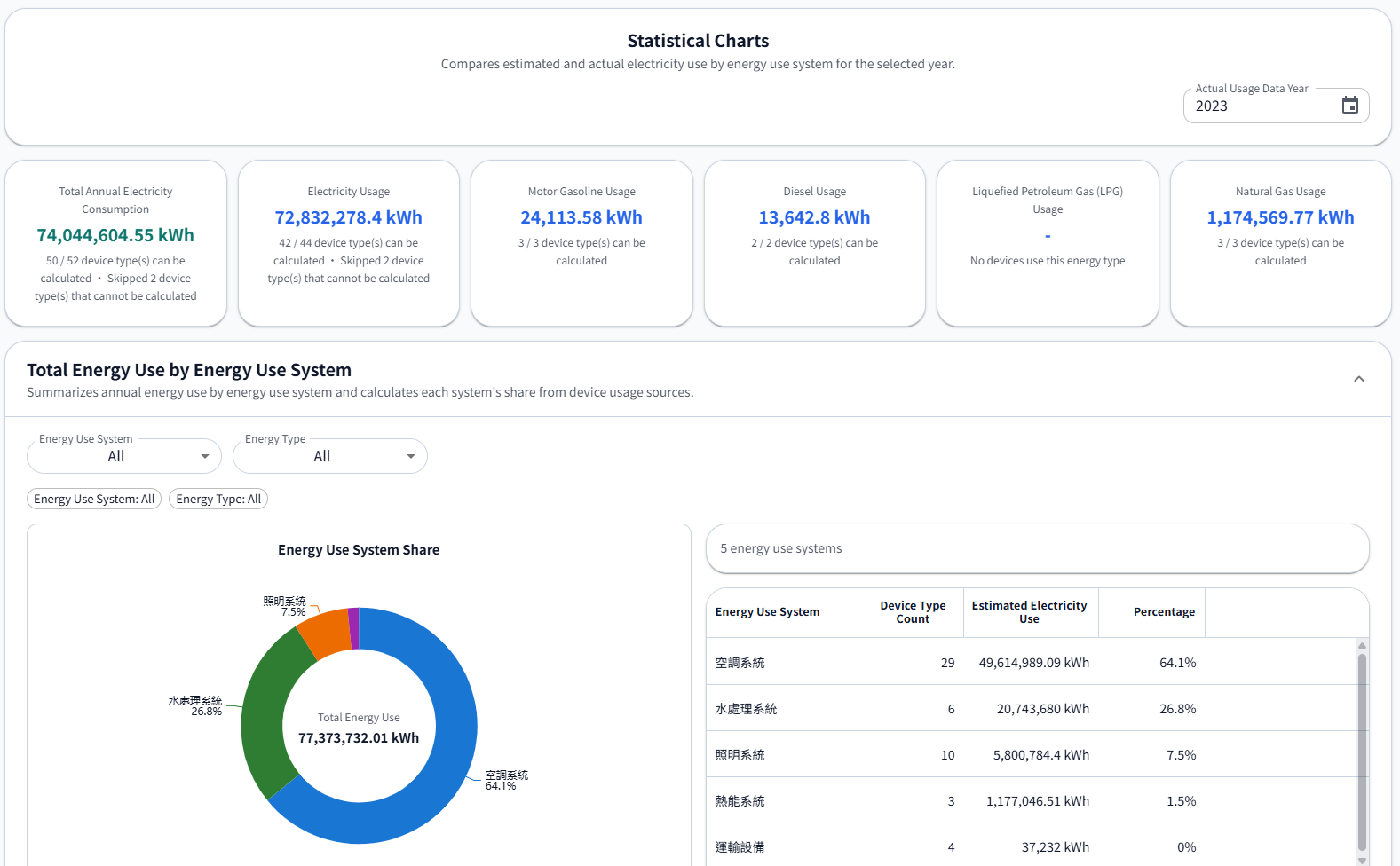
Analyze the energy consumption and proportion of each energy-using system and equipment, identify major energy uses and prioritize improvements.
Incorporate output, temperature and other related variables into regression analysis to establish energy baselines and energy performance indicators.
Compare actual energy usage, model prediction values and allowable intervals, and quickly discover abnormal periods through trend charts.
Establish an action plan for energy-saving design, equipment replacement or procurement, and set the person in charge, implementation period and sign-off process.
Track corrective measures and energy-saving results, and centrally save document versions and related records in accordance with ISO 50001 provisions.
Compare actual energy consumption with reasonable ranges through the energy baseline model, visually grasp annual trends and automatically mark abnormal periods to help track improvements early.
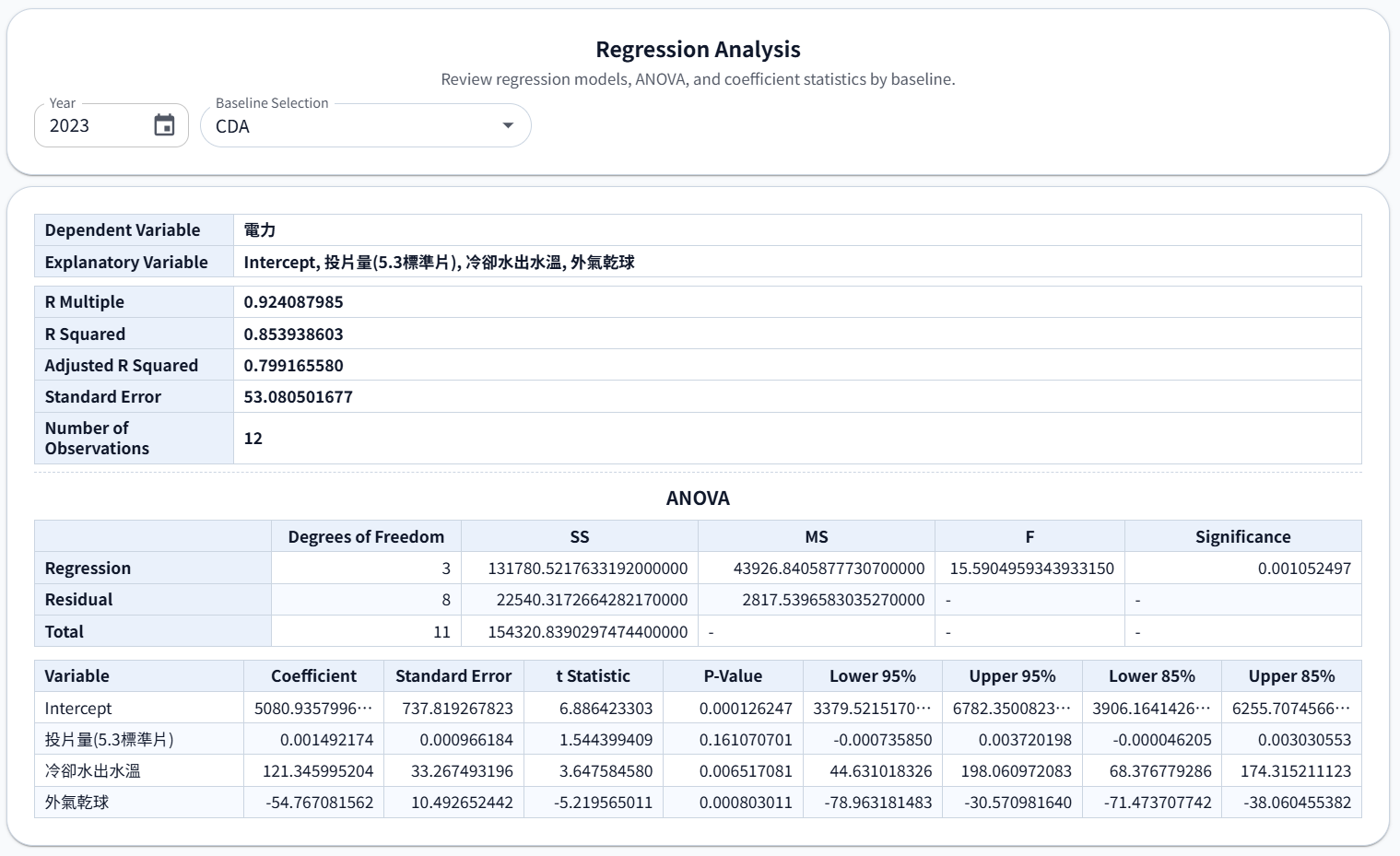
Through regression analysis and ANOVA statistical tests, we identify the key variables that affect energy use and establish a reliable energy baseline model and performance evaluation basis.
Directly mark energy-consuming equipment on the site plan to clearly understand the location, area and positioning status of the equipment, thereby improving the efficiency of energy inspection and equipment management.
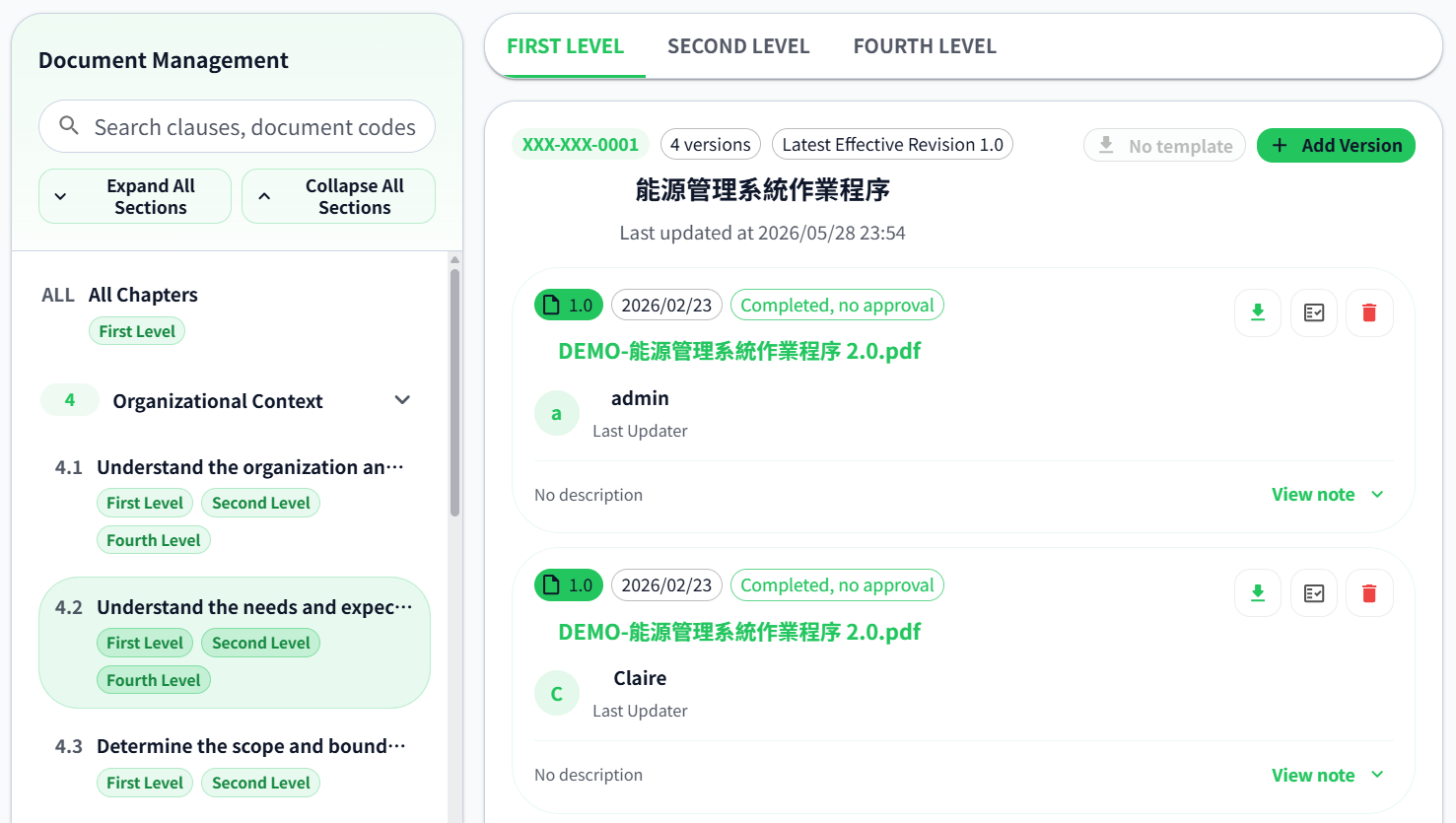
Centrally manage energy documents and versions in accordance with ISO 50001 provisions and management levels, and keep complete updates and approval records to ensure that the organization uses consistent and up-to-date documents.
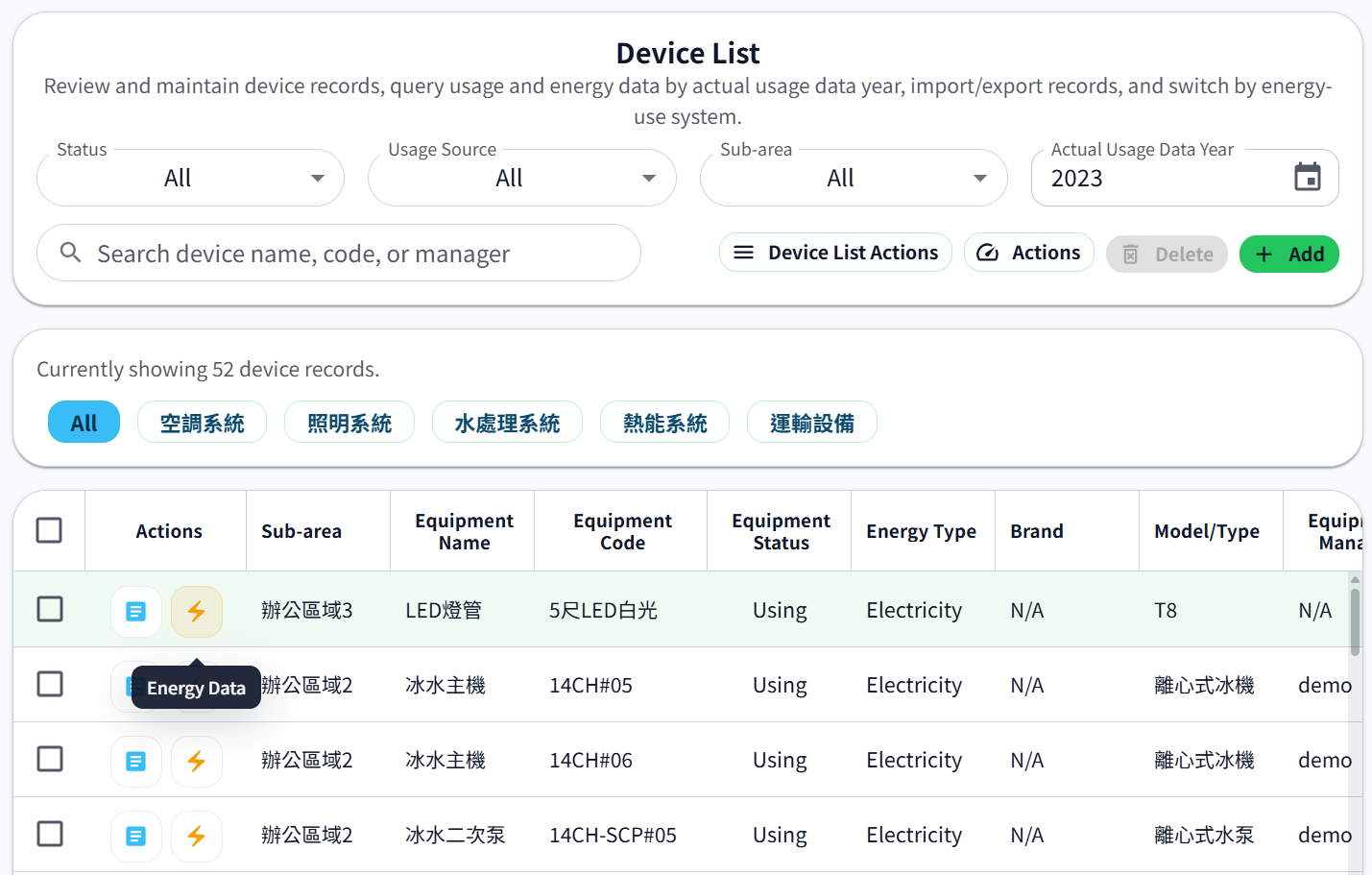
Centrally manage the specifications, quantity, area and usage sources of various energy-consuming equipment, quickly query annual energy consumption data, and establish a complete equipment energy inventory.
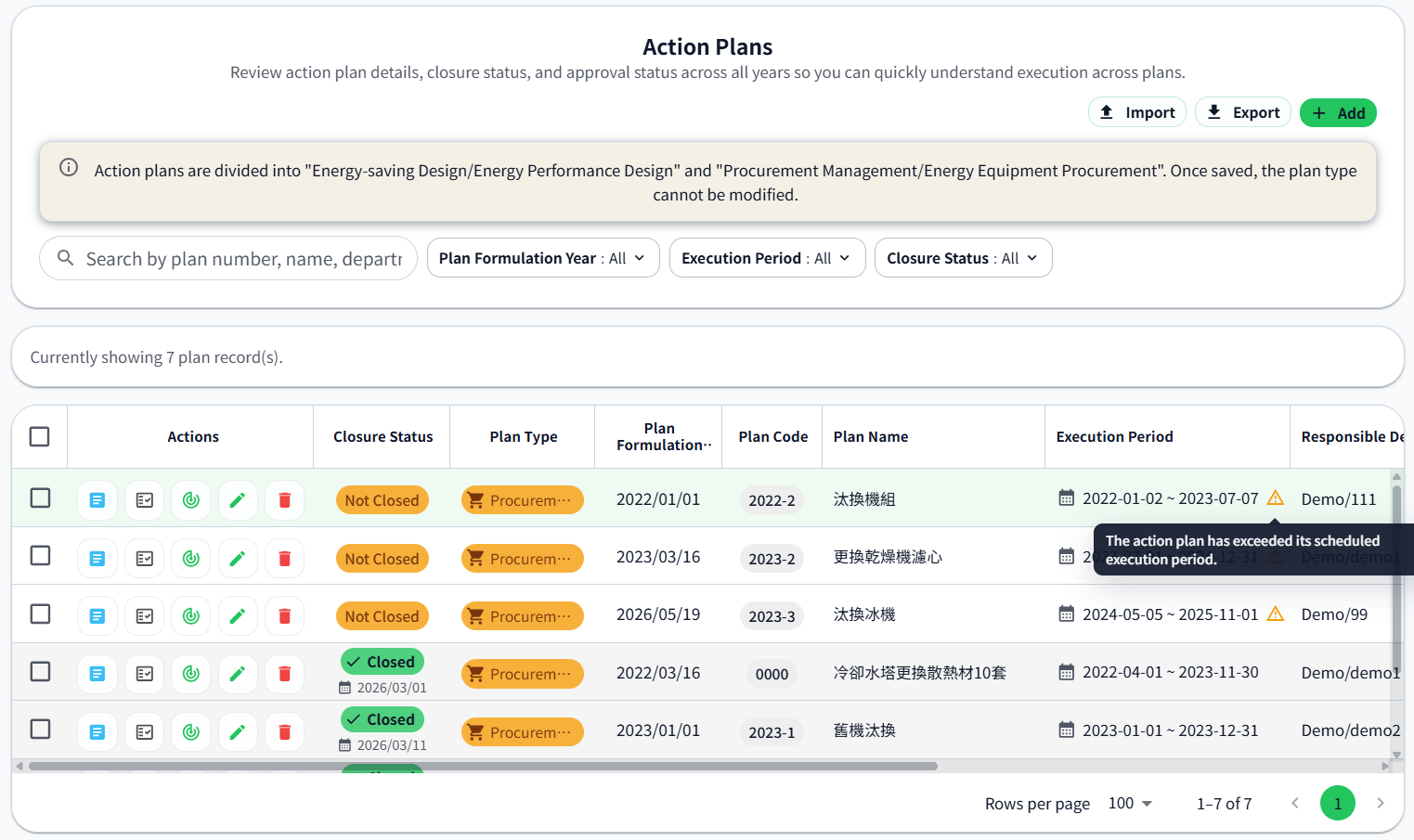
Centrally manage energy-saving improvement and equipment procurement action plans, clearly track the person in charge, implementation period, case closure and approval status to ensure that improvement measures are implemented on schedule.
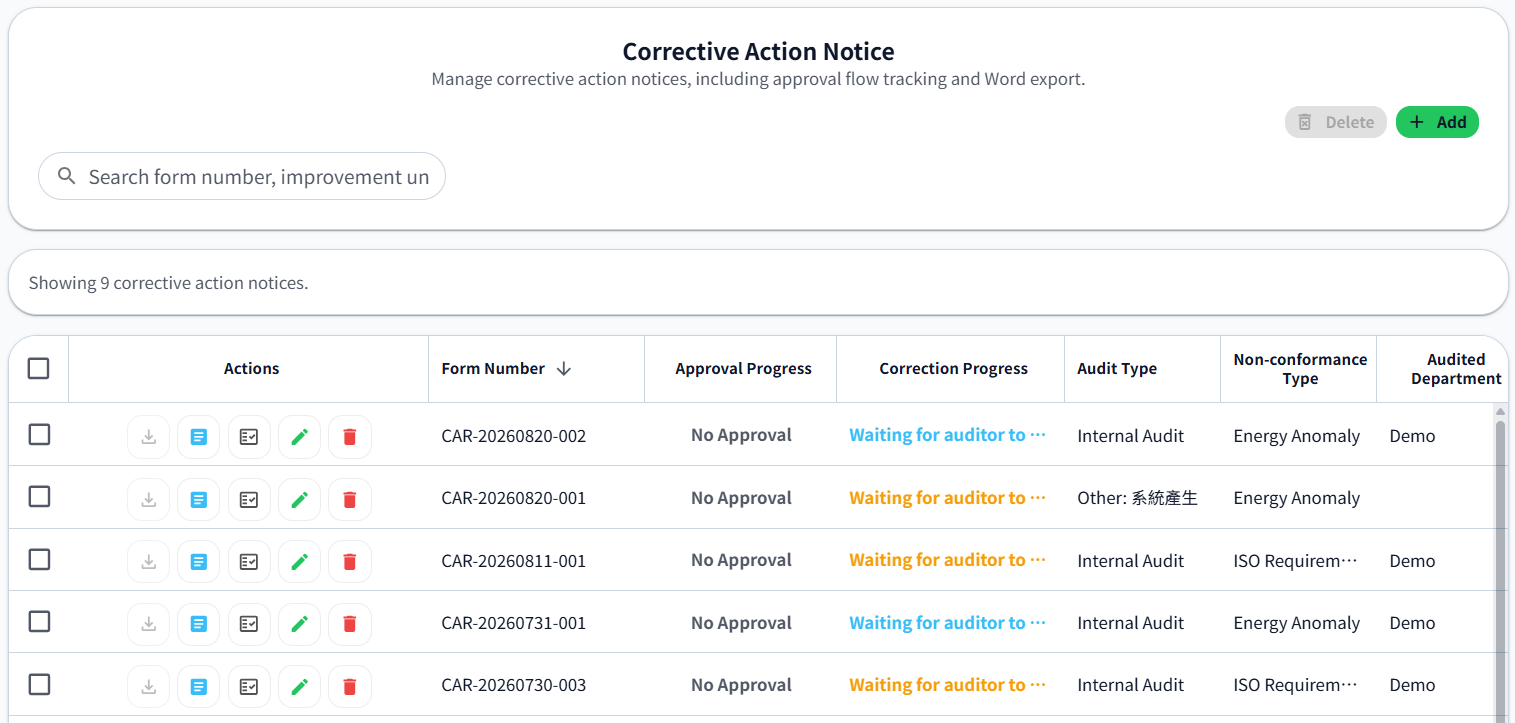
Convert energy anomalies into corrective action notices, completely track non-compliance matters, improvement progress, effectiveness confirmation and sign-off processes to ensure that problems are truly dealt with in a closed loop.
Summarize the annual consumption and proportion of each energy type and energy-consuming system, and quickly identify the main sources of energy consumption as a basis for energy review and improvement decisions.
Equipment data and energy records can be queried centrally by site, equipment and energy type, allowing teams to quickly establish a complete energy usage inventory and reduce cross-file sorting time.
The module establishes an energy baseline through a regression model, eliminating the impact of variables such as output and climate on total usage, making the judgment of energy performance and improvement results more objective and statistically based.
The system continuously compares the actual energy consumption with the allowable range of the energy baseline, helping the team to identify excessive trends in advance, locate abnormal periods, and launch cause investigations.
Each improvement action can be designated with a responsible person, implementation deadline, case closure and approval status, so that the implementation progress can be checked throughout the process, reducing the risk of scattered, delayed or omitted items.
Non-conformance matters, cause analysis, improvement implementation and effectiveness confirmation can be completely recorded to ensure that problem handling not only completes improvement measures, but also completes the case after confirmation of effectiveness.
Program documents and execution records can be centrally managed in accordance with ISO 50001 provisions and management levels, with complete versions and sign-off processes retained to shorten the time for re-collection of data before audits.