
Life cycle activity data inventory
Manage raw materials, usage and supplier information in stages according to the product life cycle, and establish a complete inventory of activity data required for carbon footprint calculation.
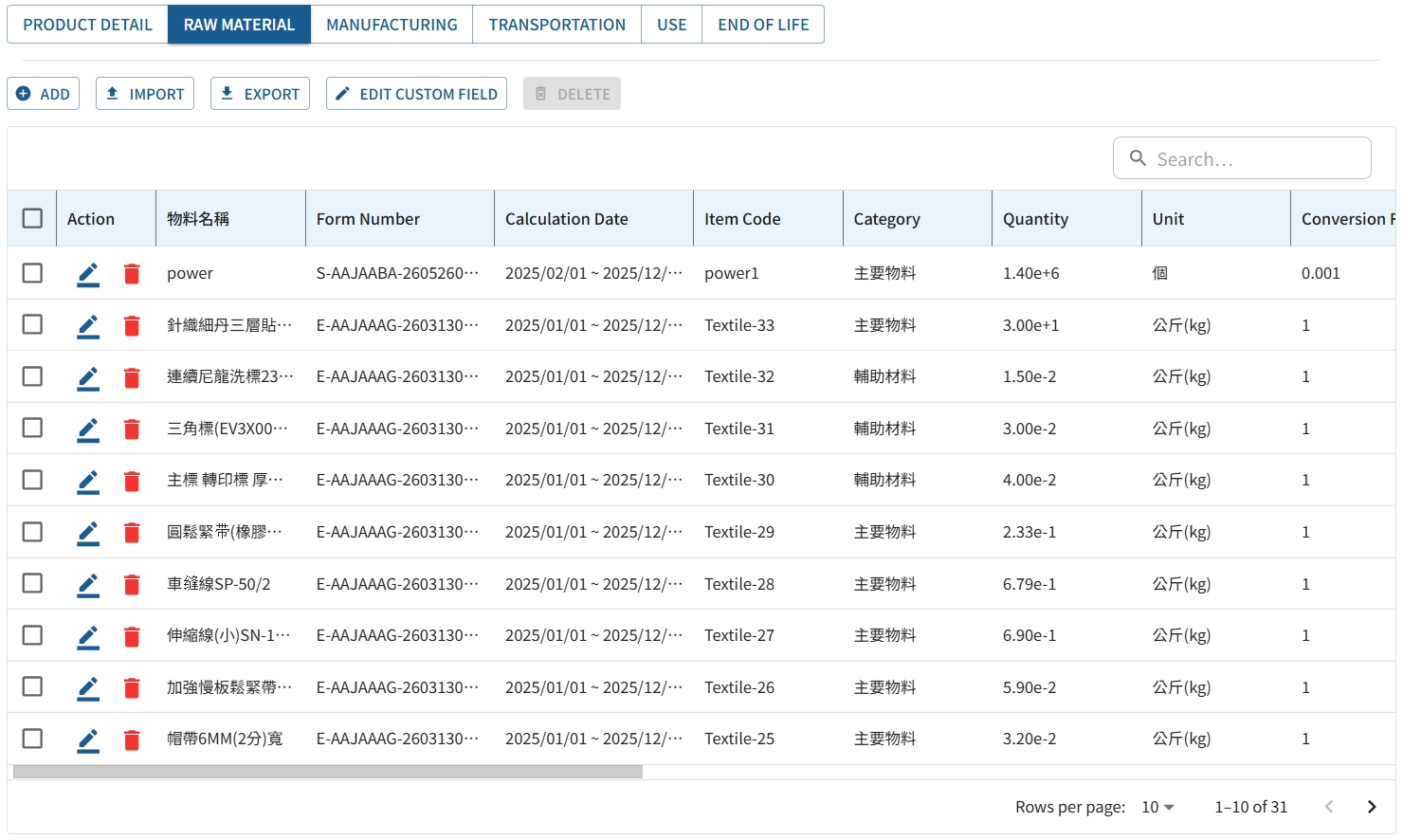
Only by seeing clearly where the carbon emissions of a product come from can we decide how to reduce them in the next step.
When customers begin to require product carbon emission data, companies are faced with not just a one-time calculation, but how to integrate information on raw materials, manufacturing processes, energy, transportation and waste stages to establish sustainably updated product carbon data.
The product carbon footprint management module connects life cycle activity data, organizational greenhouse gas inventory results and emission coefficients to help companies understand carbon emission hotspots, compare differences between different products and periods, and evaluate the carbon reduction effects that may be brought about by material replacement or process adjustments.
Raw materials, process, transportation and waste information are managed by procurement, production, logistics and other departments respectively. The data formats are different, and the organizer needs to spend a lot of time to confirm the coverage of the product life cycle.
The item names, dosages, units and emission data provided by suppliers are in different formats, and only secondary data can be used for some projects, making it difficult to confirm the source and applicability.
In-factory electricity, fuel, refrigerant and other data have been collected during organizational inspections, but when calculating product carbon footprints, they have to be reorganized and entered, which is not only time-consuming but also prone to data inconsistencies.
Multiple products share factory buildings, equipment and energy. If the allocation ratio is calculated manually, the results may be affected by inconsistent selection of output, revenue or other allocation principles.
Traditional inventory usually only obtains a single carbon footprint value, making it difficult to quickly compare different products, versions or periods, and it is impossible to instantly evaluate the carbon reduction effect after replacing materials and adjusting dosage.
Product carbon footprints involve key operational data such as raw materials, production, energy and sales. If authority control is insufficient, it may be downloaded or exported in large quantities at once. Reduce the risk of improper access and leakage of sensitive data through hierarchical authorization of roles and data scopes.
From product archiving, life cycle data collection to carbon footprint calculation and carbon reduction simulation, the system completely connects product carbon footprint operations so that every data has a source, every allocation has a basis, and product carbon emission hot spots are clearly displayed.
Product and boundary setting → Life cycle inventory creation → Activity data collection → Organizational inventory data concatenation → Emission coefficient application → Shared emission allocation → Carbon footprint calculation → Product comparison and carbon reduction simulation
Establish products, functional units, inventory periods and life cycle scope, and clearly define the basis for carbon footprint calculation.
Establish an inventory of input and output activity data based on raw materials, manufacturing processes, distribution, use and waste stages.
Compile data on raw material usage, energy consumption, transportation distance and waste disposal, and retain suppliers and data sources.
Synchronously bring in organizational greenhouse gas inventory data to reduce repeated reporting of energy and emission data within the factory.
Select appropriate emission coefficients based on each activity data, and establish the corresponding relationship between data, coefficients and sources.
Allocate shared process and energy emissions to various products based on output, revenue or other reasonable principles.
Automatically aggregate emissions at each life cycle stage, calculate unit product carbon footprint and identify major emission hotspots.
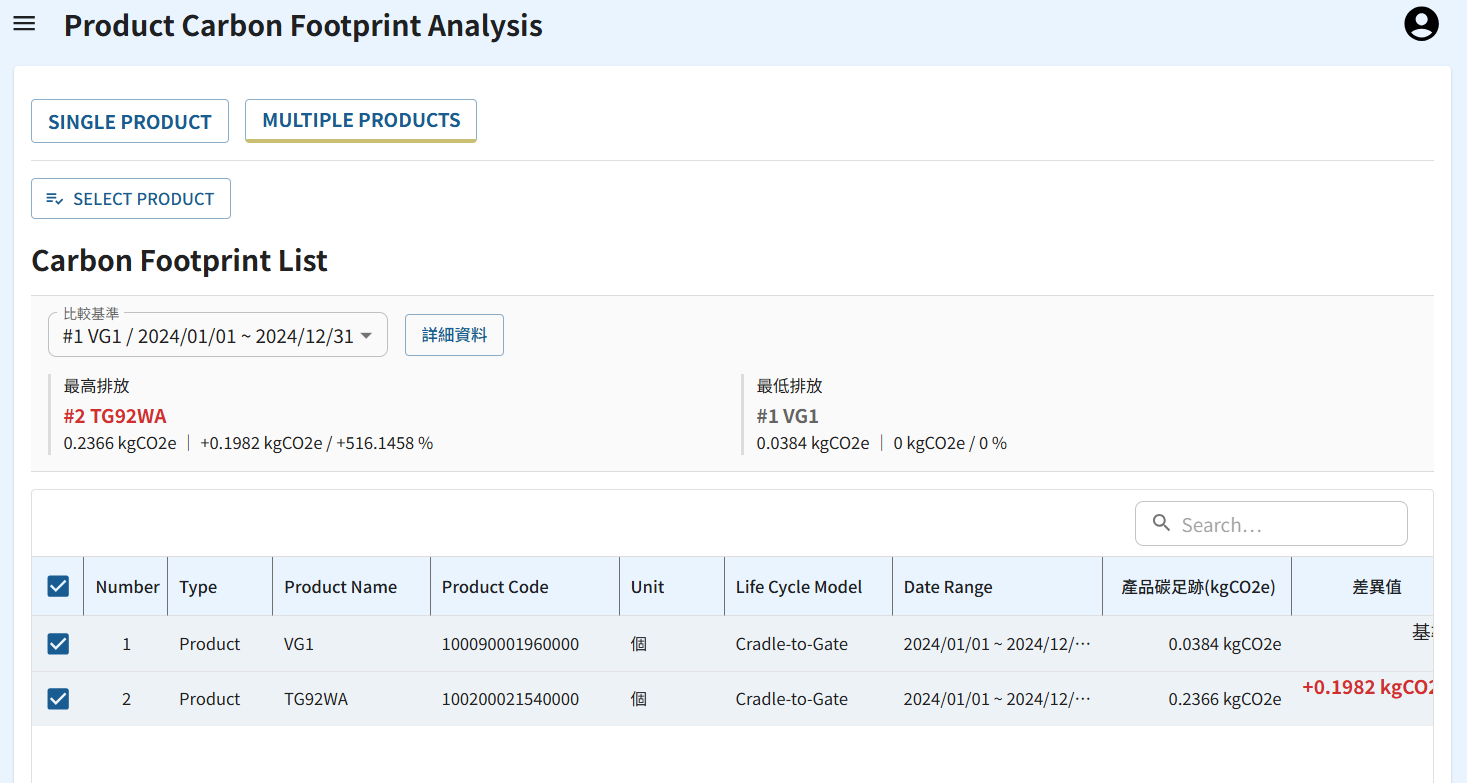
Compare the carbon emission differences of different products, versions and periods, and simulate the carbon reduction effect after material replacement or dosage adjustment.
Manage raw materials, usage and supplier information in stages according to the product life cycle, and establish a complete inventory of activity data required for carbon footprint calculation.
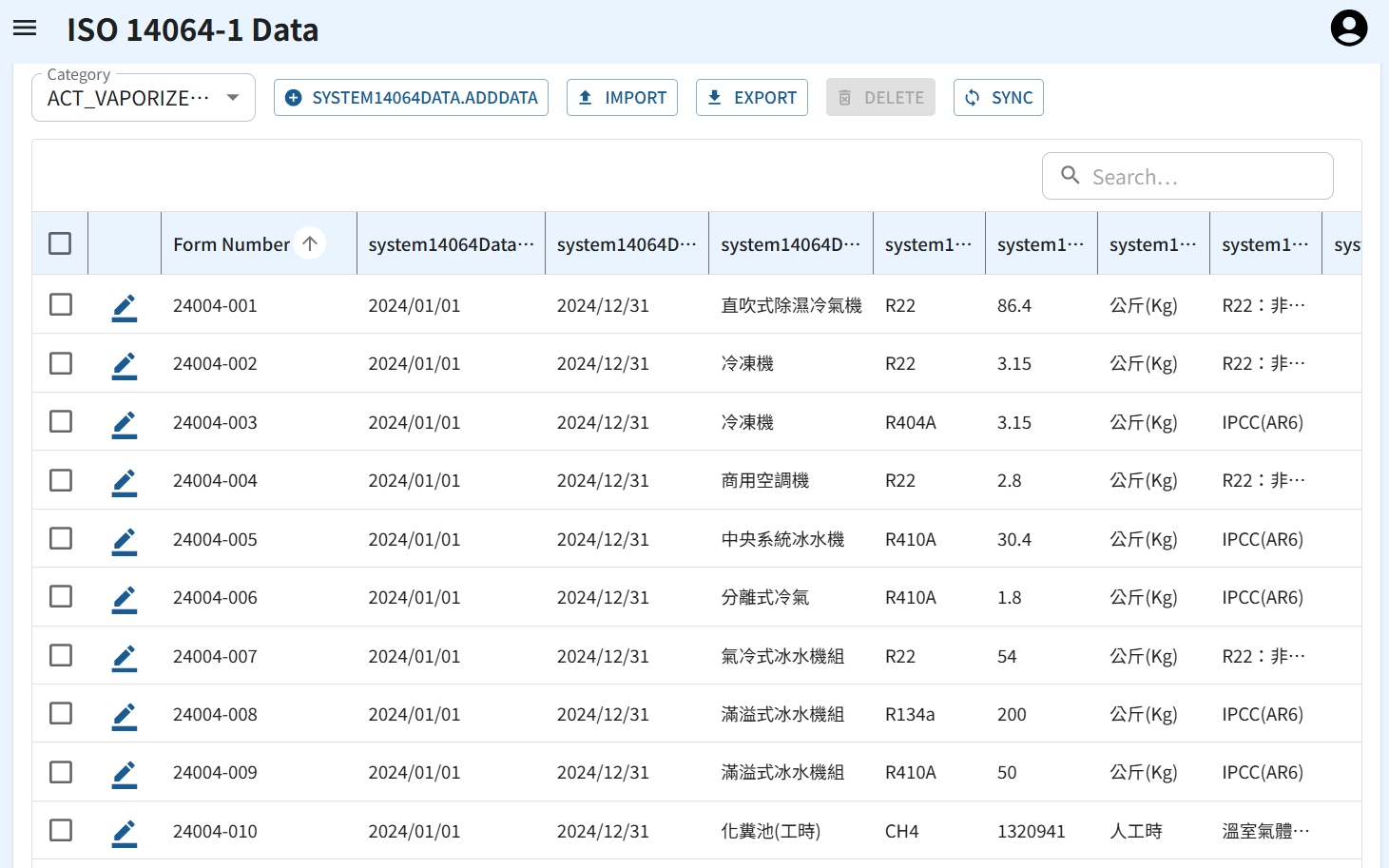
Synchronize or import ISO 14064-1 inventory data, integrate equipment, raw material and fuel consumption and data quality information to reduce repeated reporting and ensure consistent traceability of carbon footprint data.
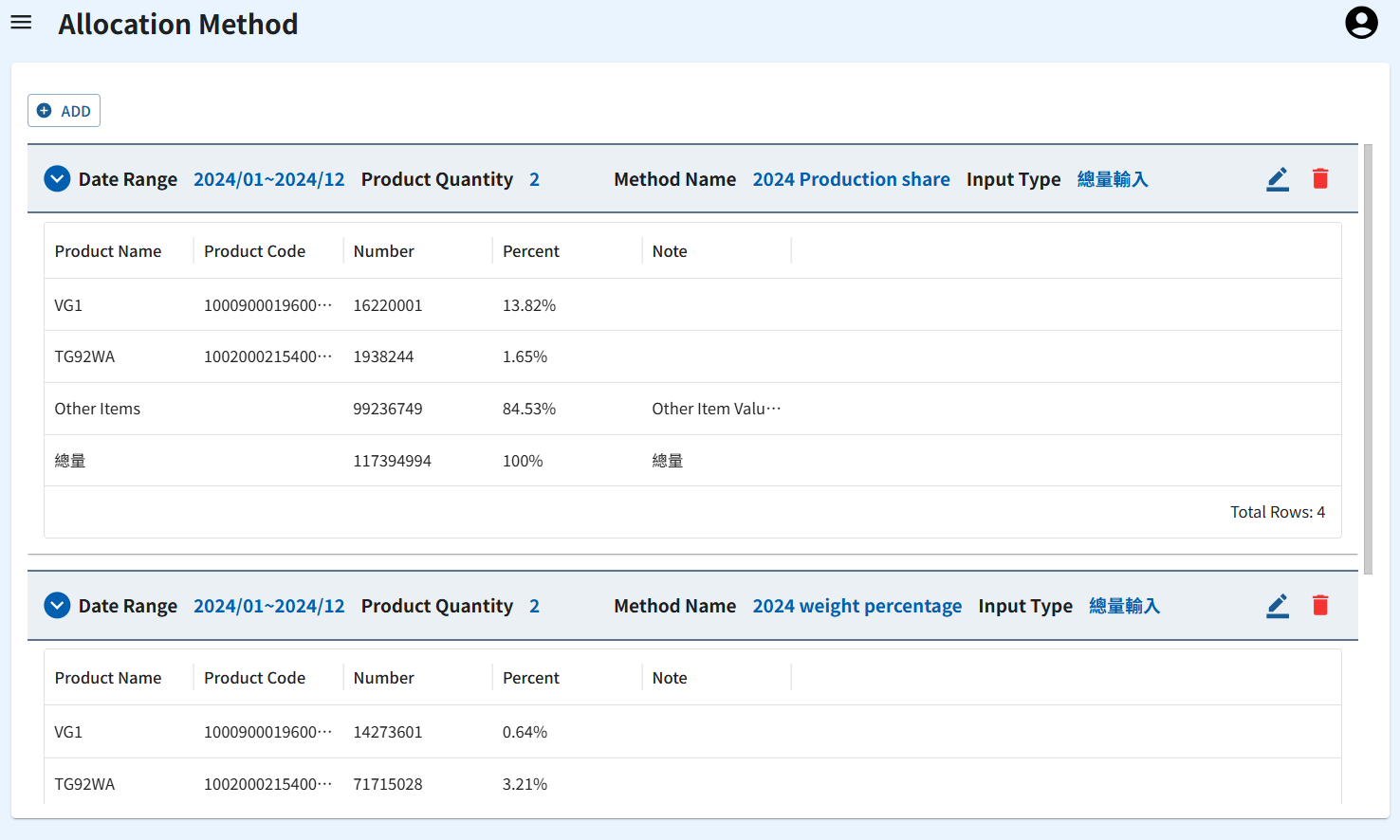
Set output, revenue and other distribution principles according to the inventory period and product characteristics, automatically calculate the allocation ratio of each product, and reasonably attribute the carbon emissions of the shared process.
Supports carbon footprint comparisons of the same product across periods and between different products, and quickly grasps emission differences, change ranges, and high and low emission items as a basis for carbon reduction improvements.
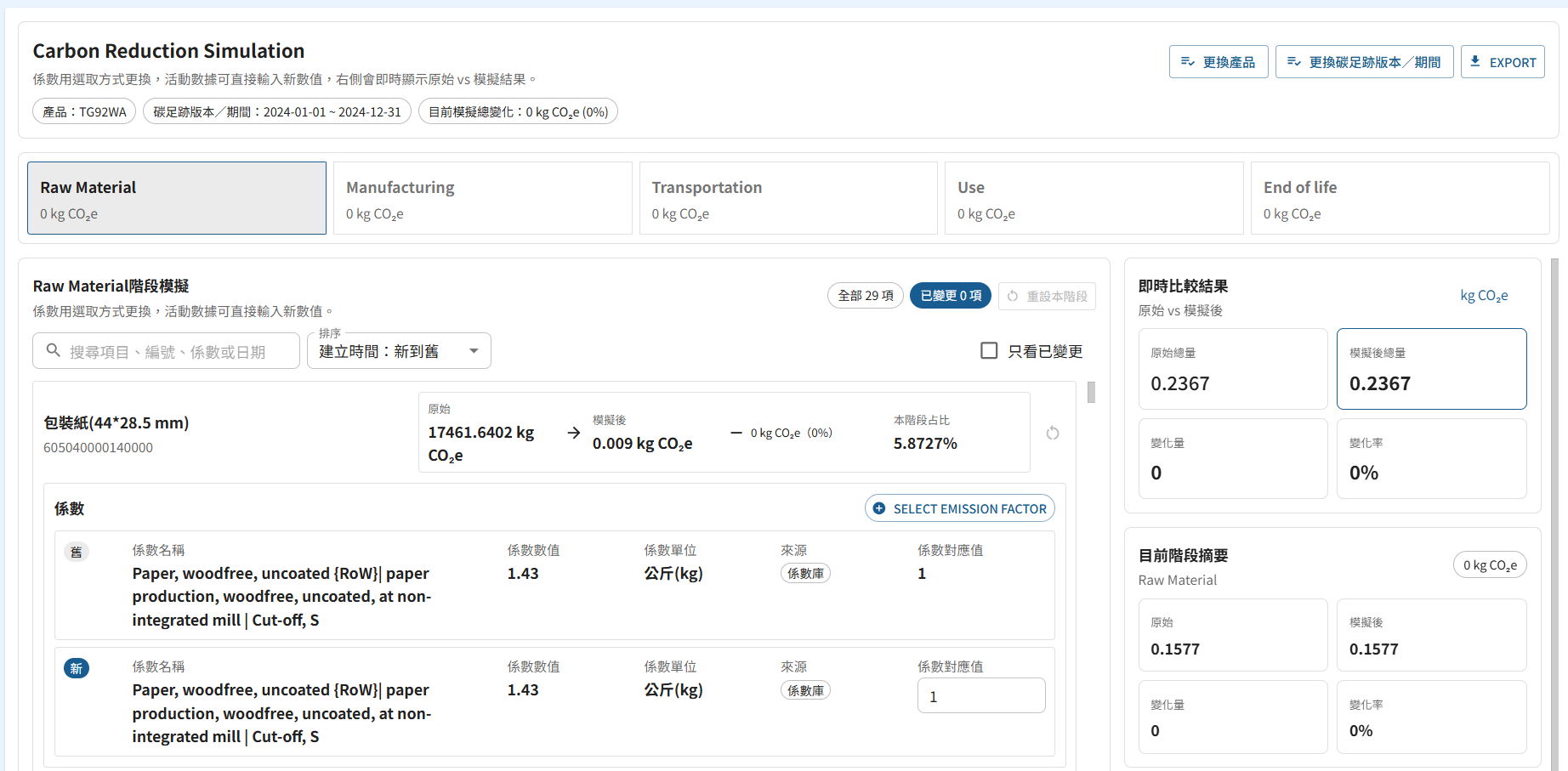
By adjusting raw material usage, activity data or emission coefficients, carbon emission changes at each life cycle stage can be simulated in real time to help evaluate the effectiveness of carbon reduction plans.
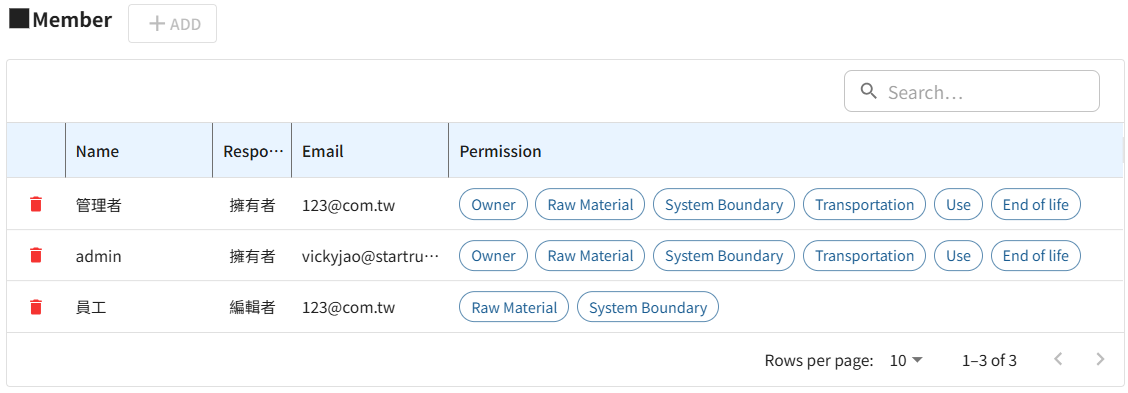
Data access scopes can be set based on products, departments and user roles, allowing hierarchical management of information such as raw materials, manufacturing processes, distribution, usage and disposal. Administrators can view and adjust permissions in real time to avoid unnecessary full downloads and exports, and reduce the possibility of massive leaks of product and operational data.
The module centrally manages items, quantities, units, suppliers and data sources according to life cycle stages, allowing procurement, production and logistics units to provide inventory data under a consistent structure.
The energy and emission data from the organizational inventory can be directly used for product carbon footprint calculations, reducing repeated reporting and maintaining the consistency of the two sets of inventory results.
Each calculation result can be reviewed back to activity data, emission coefficients, unit conversions and allocation methods, so that the calculation basis is completely retained and the risk of errors in manual application of formulas is reduced.
Shared energy and process emissions can automatically calculate product allocation proportions based on principles such as output and revenue, allowing different products to use consistent and easy-to-explain allocation logic.
The team can view the emission contribution of raw materials, manufacturing processes, distribution, use and waste stages respectively. Not only can they see the total amount, but they can also quickly identify the carbon emission hotspots that should be prioritized for improvement.
The module can instantly simulate changes in materials, process activity data and emission coefficients, and quantify the impact of different solutions on the product's carbon footprint as a basis for carbon reduction decisions.